

Based on your book
The Shallows
by Nicholas Carr
Nicholas Carr makes a compelling case that our constant engagement with the internet isn't just a habit; it's fundamentally reshaping our brains. He argues that the Net, with its endless distractions and shallow information, is eroding our capacity for deep reading, sustained concentration, and contemplative thought. It’s a book that makes you pause and look at your own digital habits with a critical eye. Carr doesn't just present opinions; he builds a meticulously researched argument, drawing from neuroscience, history, and philosophy, making you feel like you're on a journey of intellectual discovery. If you find yourself wondering why your attention span feels shorter, or if you're fascinated by how technology shapes human cognition and culture, this book is absolutely for you. It's for anyone who enjoys thoughtful social commentary and a rigorous intellectual challenge.
10 Books similar to 'The Shallows'
If Nicholas Carr's exploration of digital culture's impact on our brains resonated deeply with you, our curated list dives further into similar waters. We've selected books that share Carr's keen interest in how technology rewires our brains and reshapes our culture. You'll find other authors who explore the erosion of attention in the digital age, offering both historical context for media's influence on thought and practical strategies for reclaiming focus. These recommendations continue the conversation about the profound intellectual and societal consequences of our hyper-connected lives, inviting you to reflect further on what we gain and what we might be losing.
As an Amazon Associate, we earn from qualifying purchases.

by Neil Postman
A foundational text for understanding how media formats shape human thought, Postman's critique of television serves as the direct intellectual predecessor to Carr's concerns about the internet. Both authors explore how the medium of communication fundamentally alters the quality of public discourse and cognitive depth.

by Cal Newport
While Carr focuses on the neurological 'what' and 'why' of digital distraction, Newport provides the 'how' for reclaiming focus. It shares the same urgent tone regarding the erosion of our attention spans and offers a philosophical framework for intentional living in a hyper-connected world.

by Jeff Jarvis
This book provides a historical counter-perspective to Carr by examining the era of print as a temporary anomaly in human history. It mirrors Carr's interest in how the transition from oral to print, and now to digital, transforms our relationship with knowledge and society.

by Johann Hari
Hari investigates the systemic forces stripping away our ability to pay attention, echoing Carr's concerns about the biological impact of the digital age. The book blends personal narrative with scientific research in a style very similar to the investigative approach used in The Shallows.

Love to read on the go?
Explore Kindle e-readers and take your books with you.
As an Amazon Associate, we earn from qualifying purchases.

by Jaron Lanier
Written by a computer science pioneer, this book offers a more urgent and cynical take on the algorithmic manipulation Carr touches upon. It explores the psychological and societal degradation caused by the 'BUMMER' machine, matching Carr's focus on how technology rewires our behavior.

Levitin uses neuroscience to explain how we can navigate the information overload described in The Shallows. Fans of Carr's deep dives into brain plasticity and cognitive load will appreciate the scientific rigor and practical applications for maintaining focus.
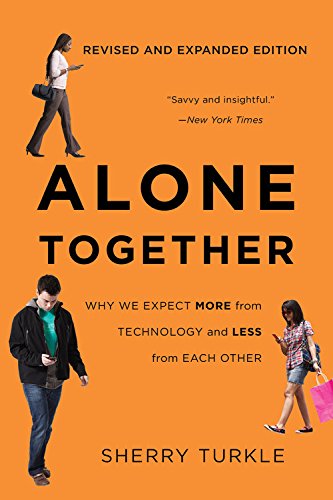
Turkle explores the paradox of being more connected than ever yet feeling increasingly isolated, a theme that resonates with Carr's observations on the thinning of human experience. The book focuses on the psychological cost of our digital 'tethered' lives.

For readers who enjoyed Carr's analysis of how Google and other tech giants influence our thinking, Zuboff provides a massive, deep-dive into the economic imperatives behind that influence. It is a dense, intellectual exploration of the digital architecture that shapes modern life.

by Neil Postman
In this work, Postman argues that our society has become a 'technopoly' where technology is deified and traditional culture is rendered invisible. It shares Carr's philosophical skepticism regarding 'progress' and the hidden costs of technological adoption.

As Carr's follow-up to The Shallows, this book expands the focus from how the internet changes our brains to how automation and algorithms change our skills and sense of self. It maintains the same elegant prose and rigorous research that fans of his first book admire.

Not sure what they've already read?
Let them pick their next favorite with an Amazon Gift Card.
As an Amazon Associate, we earn from qualifying purchases.
As an Amazon Associate, we earn from qualifying purchases.