
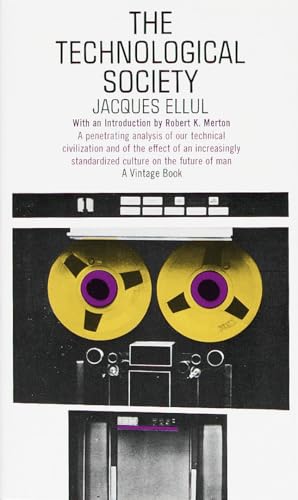
Based on your book
The Technological Society
by Jacques Ellul
Jacques Ellul does not argue that technology is merely a collection of gadgets, but rather that technique has become the primary logic governing every aspect of human life. He explores how efficiency, standardization, and rationality have colonized our social, political, and private spheres, leaving little room for genuine human agency. Reading this is a rigorous, often exhausting intellectual exercise that feels less like a traditional book and more like a slow-motion collision with the inevitable. The prose is dense, analytical, and profoundly pessimistic, offering a stark autopsy of modern civilization. It is an essential, albeit unsettling, choice for readers who are already skeptical of progress and want to understand the invisible structures that dictate how we work, live, and think. If you have ever felt that society is running on a track you never chose, Ellul provides the blueprint for why that is.
10 Books similar to 'The Technological Society'
These books were selected because they share Ellul's deep-seated suspicion toward the unchecked growth of technical systems. Whether through the lens of fiction like Huxley and Vonnegut or the direct sociological analysis of Postman and Debord, each work addresses the erosion of human autonomy within a rigid, automated framework. We chose these titles because they bridge the gap between Ellul's abstract theory and the visceral reality of living in a hyper-managed world. They are perfect for those who want to examine how our reliance on efficiency reshapes our values, our discourse, and our very definition of freedom.
As an Amazon Associate, we earn from qualifying purchases.

Huxley's masterpiece serves as the fictional counterpart to Ellul's sociological critique, illustrating a world where technique and efficiency have completely eradicated human freedom and individuality. It explores the terrifying logical conclusion of a society obsessed with technological control and scientific conditioning.

by Neil Postman
Postman expands on Ellul's ideas by analyzing how the medium of television, rather than just industrial machinery, fundamentally alters our public discourse and culture. It is an essential read for understanding how technological shifts reshape human cognition and society.
This foundational philosophical text deeply influenced Ellul's own thinking, exploring the essence of technology as a way of revealing the world. It provides the heavy theoretical framework that underpins the concerns raised in The Technological Society.

While Ellul focuses on the subtle, systemic encroachment of technique, Orwell provides the visceral, political manifestation of total control. Both books are essential reading for understanding the loss of human agency in the face of overwhelming institutional power.

Prefer to listen?
Try Audible and hear the story instead of reading it.
As an Amazon Associate, we earn from qualifying purchases.

by E.M. Forster
This prophetic short story envisions a future where humanity lives underground, entirely dependent on a global machine, mirroring Ellul's warnings about our total reliance on technical systems. It captures the fragility of a civilization that has outsourced its survival to technology.

by Neil Postman
Postman explicitly builds upon Ellul's concept of 'technique,' arguing that we have entered a state where technology dictates our values rather than serving them. It is a direct, accessible, and deeply critical examination of the modern technological landscape.
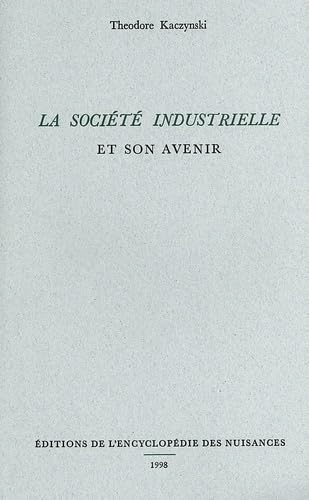
Regardless of the author's infamy, this essay is frequently cited in academic discourse alongside Ellul for its critique of the industrial-technological system and its dehumanizing effects. It echoes Ellul's concerns about the loss of autonomy in a system that requires human conformity.

by Guy Debord
Debord provides a Marxist-influenced critique that complements Ellul's work, focusing on how technology and capitalism turn authentic human life into a series of mediated images. It is a challenging, dense, and profound analysis of modern alienation.
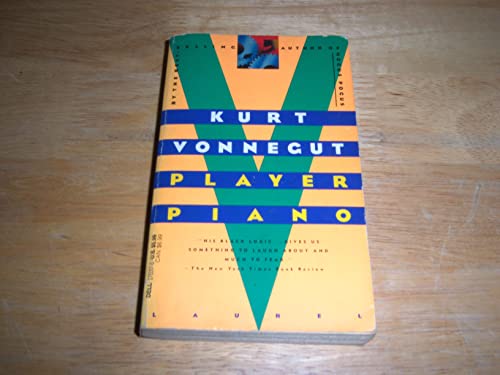
Vonnegut's debut novel offers a satirical look at a highly automated society where human labor is rendered obsolete, reflecting Ellul's anxiety about the dehumanizing nature of efficiency. It balances dark themes with the author's signature wit.

Baudrillard takes the critique of technology into the realm of the hyper-real, exploring how technological reproduction creates a reality more 'real' than the physical world. It is the perfect follow-up for readers who want to understand the philosophical implications of a tech-saturated society.

Love to read on the go?
Explore Kindle e-readers and take your books with you.
As an Amazon Associate, we earn from qualifying purchases.
As an Amazon Associate, we earn from qualifying purchases.