

Based on your book
The Watchman's Rattle
by Costa, Rebecca D.
The Watchman's Rattle tackles the uncomfortable question of why advanced civilizations eventually buckle under the weight of their own complexity. Rebecca D. Costa argues that we are currently suffering from a cognitive failure, where the speed of our technological advancements has outpaced our biological ability to solve the resulting problems. The reading experience is clinical and urgent, functioning less like a standard history book and more like an intellectual alarm clock. Costa maps out how societies fall into patterns of fast-forgetting and irrational behavior when faced with systemic crises. It is a dense, analytical read that demands your full attention, making it perfect for the reader who enjoys dissecting the mechanics of human society and wants to understand the invisible pressures pushing us toward a potential breaking point.
10 Books similar to 'The Watchman's Rattle'
If the analytical rigor of The Watchman's Rattle left you hungry for more, these selections expand on the themes of civilizational fragility and evolutionary psychology. We curated this list to highlight the intersection of systemic complexity and human behavior, pulling in works that explore why we repeat historical patterns of failure. Whether you are interested in the environmental catalysts of collapse or the cognitive shortcuts that cloud our judgment, these authors offer the same sobering, evidence-based perspective on the future of our species as Costa does in her work.
As an Amazon Associate, we earn from qualifying purchases.

Like Costa's work, this book examines the factors that lead civilizations to ruin, providing a rigorous, analytical look at how environmental and societal decisions dictate survival. It shares the same urgent, intellectual tone and focus on long-term systemic consequences.

This book explores the catastrophic impact of human activity on the planet, mirroring Costa's concern about our inability to address complex, slow-moving threats. It combines deep scientific research with a sobering, observational narrative style.

Harari offers a sweeping look at human evolution and societal development that complements Costa's focus on our cognitive limitations. Both authors challenge readers to reconsider the trajectory of human progress and the structures we have built.
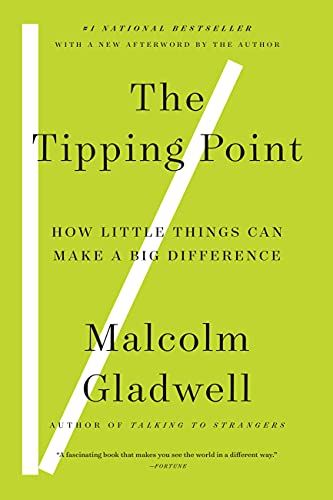
Gladwell explores the mechanics of social change and how trends spread, which aligns with Costa's interest in how complexity impacts societal behavior. Readers who enjoy Costa's focus on the 'why' behind human patterns will appreciate this accessible yet profound analysis.

Love to read on the go?
Explore Kindle e-readers and take your books with you.
As an Amazon Associate, we earn from qualifying purchases.

Toffler's classic work on the psychological and societal effects of rapid change is a spiritual predecessor to Costa's theory of 'fast-forgetting.' It provides a foundational understanding of why modern humans struggle to adapt to the complexity of their own creations.

This book delves into the political and cultural challenges facing Western civilization, echoing Costa's concerns about the fragility of modern governance. It offers a similarly critical perspective on the intersection of history, politics, and future survival.

A foundational text for anyone interested in the macro-forces that shape human history, this book provides the historical context necessary to understand the societal collapse theories Costa discusses. It is essential reading for understanding the structural causes of human outcomes.

Pinker provides a data-driven look at human behavior that contrasts with the doom-and-gloom of collapse theories, offering a fascinating counterpoint to Costa's perspective. It shares the same commitment to using scientific data to explain complex social phenomena.

Taleb's exploration of probability and our misunderstanding of complex systems resonates deeply with Costa's analysis of why we fail to predict or manage societal threats. Both books encourage a skeptical, rigorous approach to understanding the world.

Leakey brings an evolutionary biologist's perspective to the question of human survival, which aligns perfectly with Costa's scientific approach. It is a compelling look at the fragility of our species and the historical patterns we are currently repeating.

Not sure what they've already read?
Let them pick their next favorite with an Amazon Gift Card.
As an Amazon Associate, we earn from qualifying purchases.
As an Amazon Associate, we earn from qualifying purchases.