

Based on your book
The Work of Disaster
by Aidan Seale-Feldman
The Work of Disaster takes you to post-earthquake Nepal, but it's not just a story of recovery. Aidan Seale-Feldman meticulously unpacks how international aid, particularly mental health initiatives, reshaped the landscape and the very understanding of suffering. This book is a deep, analytical dive, asking uncomfortable questions about the power dynamics at play when care arrives from outside. It’s a complex, psychological journey that feels less like a simple narrative and more like an intellectual puzzle, revealing the subtle ways good intentions can become fraught. You’ll find yourself thinking critically about the ethics of intervention and the cultural nuances of healing long after you turn the final page. This is for readers who enjoy rigorous social commentary and aren't afraid to grapple with challenging moral dilemmas.
10 Books similar to 'The Work of Disaster'
If you found yourself captivated by Aidan Seale-Feldman's incisive look at the often-fraught realities of global aid and the intricate power dynamics that emerge in disaster's wake, then our curated list is for you. We've chosen books that similarly pull back the curtain on how systems—from healthcare to economic policies—respond to crisis, often revealing uncomfortable truths. These recommendations share The Work of Disaster's commitment to deep ethnographic insight and unflinching social commentary, exploring the moral dilemmas and human resilience found within complex, often unjust, institutional frameworks.
As an Amazon Associate, we earn from qualifying purchases.

by Naomi Klein
Klein's seminal work exposes how political and economic elites exploit crises and disasters to push through unpopular policies, mirroring Seale-Feldman's critique of the political economy of disaster and the aid industry. Readers will appreciate the deep dive into power dynamics and systemic exploitation.

by Sheri Fink
This investigative masterpiece dissects the ethical dilemmas and systemic failures within a hospital during Hurricane Katrina, offering a granular look at human decisions under extreme duress. It resonates with "The Work of Disaster" by examining the complex, often flawed, human and institutional responses to catastrophe.

Boo's immersive ethnographic journalism provides an intimate portrait of life in a Mumbai slum, revealing the systemic inequalities and the fierce resilience of individuals navigating poverty and corruption. Like Seale-Feldman, Boo highlights the human experience within a complex, often unjust, global system.

by Tracy Kidder
This biography of Dr. Paul Farmer chronicles his relentless efforts to provide healthcare in impoverished nations, exposing the systemic challenges and ethical complexities of global aid and development. It shares "The Work of Disaster"'s focus on the human impact of large-scale humanitarian efforts and their inherent difficulties.

Love to read on the go?
Explore Kindle e-readers and take your books with you.
As an Amazon Associate, we earn from qualifying purchases.

by Anne Fadiman
Fadiman's book explores the profound cultural clash between a Hmong refugee family and the American medical system, demonstrating how well-intentioned systems can fail due to a lack of understanding. It mirrors "The Work of Disaster" in its critical examination of institutional responses to vulnerable populations and the human cost of systemic blind spots.

Desmond's ethnographic study reveals the devastating impact of eviction on low-income families in Milwaukee, exposing the systemic nature of poverty and the profit motives embedded in the housing crisis. Like Seale-Feldman, Desmond uses deep observation to critique systems that exacerbate suffering.

Through the stories of North Korean defectors, Demick offers a rare and intimate look at daily life under an oppressive regime, highlighting human resilience and the profound impact of political systems on individual lives. This book shares "The Work of Disaster"'s focus on human experience within a restrictive and often cruel system.

Kolbert's Pulitzer-winning work explores the history of mass extinctions and the ongoing, human-caused sixth extinction, blending scientific reporting with historical context. It connects to "The Work of Disaster" by examining large-scale environmental crises, human responsibility, and the systemic failures to address impending catastrophe.
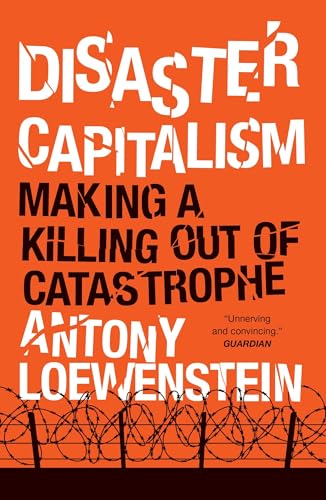
Loewenstein investigates how corporations and governments profit from wars, natural disasters, and other crises, from Afghanistan to Haiti. This book directly aligns with "The Work of Disaster" in its critical examination of the global aid industry and the cynical exploitation of suffering for economic gain.

This urgent and sobering account details the potential future impacts of climate change, moving beyond scientific data to explore the societal, political, and human consequences. Readers of "The Work of Disaster" will appreciate its unflinching look at large-scale catastrophe and the systemic failures that exacerbate it.

Not sure what they've already read?
Let them pick their next favorite with an Amazon Gift Card.
As an Amazon Associate, we earn from qualifying purchases.
As an Amazon Associate, we earn from qualifying purchases.