

Based on your book
The World Behind the World
by Erik Hoel
Erik Hoel's The World Behind the World isn't just another scientific text; it's an exhilarating intellectual expedition into the very core of consciousness. Hoel invites you to grapple with the biggest questions about what it means to experience the world, challenging conventional scientific views and pushing for a radical new way to understand our inner lives. The reading experience is dense and demanding, but utterly rewarding, feeling less like being lectured and more like joining a brilliant mind on a quest for a paradigm shift. This is for readers who thrive on complex philosophical and scientific inquiry, who aren't afraid to have their fundamental assumptions about reality shaken, and who love a book that leaves them thinking long after the last page.
10 Books similar to 'The World Behind the World'
If you found yourself captivated by Erik Hoel’s rigorous exploration of consciousness and his push for a paradigm shift, our selections continue that fascinating journey. We’ve curated books that likewise challenge the 'extrinsic' view of reality, instead championing the 'intrinsic' perspective of subjective experience. Each recommendation delves into the deep origins of awareness, from the evolution of the mind to the very structure of our perception, offering further intellectual adventures into the world behind the world.
As an Amazon Associate, we earn from qualifying purchases.
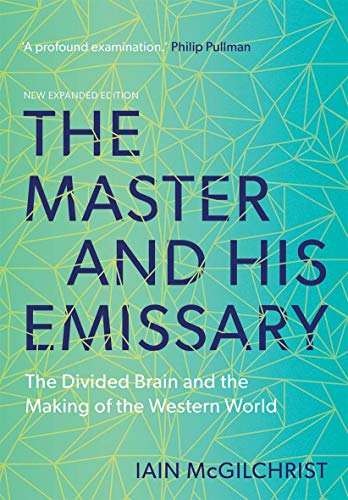
Like Hoel, McGilchrist explores the tension between two ways of perceiving the world—the analytical, reductive 'extrinsic' view and the holistic, lived 'intrinsic' view. It provides a deep historical and neurological look at how these two perspectives have shaped Western culture and the human mind.

As a primary proponent of Integrated Information Theory (IIT), which Hoel discusses extensively, Koch offers a rigorous yet accessible scientific framework for understanding consciousness. This book shares the same commitment to solving the 'Hard Problem' through a blend of neurobiology and information theory.

Hoel's interest in the evolution of human narrative and the 'internal' perspective mirrors Jaynes's classic, controversial theory on how human self-awareness emerged. Both authors look at ancient literature and historical shifts to trace the development of the modern subjective experience.
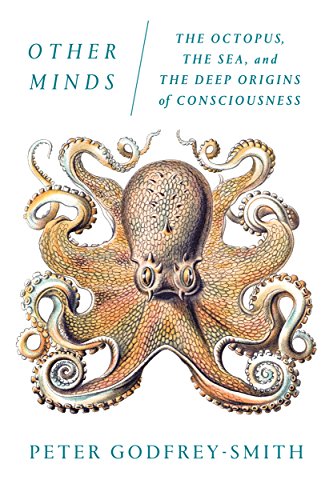
This book examines the evolution of subjectivity and the 'intrinsic' perspective from a biological standpoint. It resonates with Hoel’s exploration of how complex systems develop the capacity for experience, using the alien intelligence of cephalopods as a case study.

Prefer to listen?
Try Audible and hear the story instead of reading it.
As an Amazon Associate, we earn from qualifying purchases.

by Anil Seth
Seth explores the 'inner movie' of consciousness and how our brains construct our reality, a central theme in Hoel's work. The book balances cutting-edge neuroscience with philosophical inquiry into why the world feels the way it does to a conscious observer.

Kastrup argues for a philosophy of idealism that prioritizes the 'intrinsic' perspective of consciousness over materialist 'extrinsic' views. Readers who enjoyed Hoel's critique of scientific reductionism will find Kastrup's analytical approach to the primacy of mind deeply engaging.
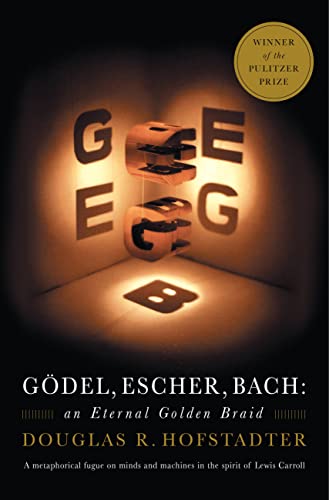
This polymathic work explores how self-reference and meaning emerge from physical systems, much like Hoel’s investigation into how the 'world behind the world' arises. It shares a similar intellectual ambition, blending science, art, and logic to explain the nature of the self.

Hoffman uses evolutionary psychology and mathematical modeling to argue that our perceptions are not a window into reality, but a user interface. This aligns with Hoel's discussion on the gap between our internal experiences and the underlying physical structure of the universe.

by Mark Solms
Solms attempts to bridge the gap between subjective experience and objective biology by focusing on the feeling of being alive. His work echoes Hoel’s quest to find a scientific 'hook' for the intrinsic perspective within the mechanisms of the brain.

by Oliver Sacks
While more clinical, Sacks’s classic work emphasizes the 'intrinsic' narrative of the patient’s life over the 'extrinsic' data of their pathology. Hoel’s appreciation for the novel as a tool for understanding consciousness finds a perfect real-world parallel in Sacks’s deeply humanistic case studies.

Love to read on the go?
Explore Kindle e-readers and take your books with you.
As an Amazon Associate, we earn from qualifying purchases.
As an Amazon Associate, we earn from qualifying purchases.