

Based on your book
The World Inside
by Silverberg, Robert
In the future, humanity lives in massive, thousand-story buildings called urbmons, where the population is dense, privacy is a relic of the past, and every social interaction is governed by strict, hedonistic norms. Robert Silverberg imagines a world where the outside is a myth and the vertical city is everything. The reading experience is intensely claustrophobic; you feel the weight of millions of people pressed into these towers, yet the tone remains strangely detached, almost clinical in its observation of this hyper-social existence. It is a book about the friction between individual desire and the crushing pressure of a system that demands total conformity. If you enjoy speculative fiction that prioritizes sociological puzzles over high-octane action, and if you are interested in how human psychology warps under extreme environmental conditions, this will get under your skin.
10 Books similar to 'The World Inside'
The books we have selected for this list build on the specific tension of Silverberg's work, focusing on what happens when human biology collides with artificial, enclosed, or overcrowded systems. If you found the urbmon lifestyle both fascinating and horrifying, these titles offer a broader look at the consequences of state-mandated social engineering and resource scarcity. We chose these stories because they share a common thread of psychological decay, exploring how people maintain their sense of self when privacy disappears and their environment dictates every aspect of their survival, morality, and eventual rebellion.
As an Amazon Associate, we earn from qualifying purchases.
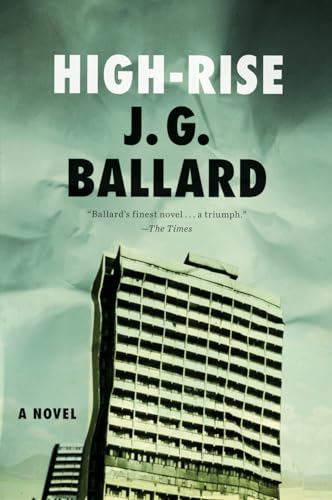
by J.G. Ballard
Like Silverberg's work, this novel explores the psychological breakdown of society within a self-contained, vertical urban environment. It mirrors the claustrophobic tension and the rapid descent into tribalism that occurs when people are packed too tightly together.

This classic shares the themes of a highly regulated, hedonistic society that trades individual freedom for stability and comfort. Fans of the 'urbmon' lifestyle in Silverberg's book will recognize the same critique of technological dependency and enforced happiness.

by John Brunner
This novel is a seminal work on the theme of overpopulation, utilizing a fractured, experimental narrative style to capture the chaos of a crowded future. It provides a more global, frantic perspective on the same societal pressures found in Silverberg's enclosed world.

This is the quintessential novel about the horrors of overpopulation, grounding its dystopian vision in a gritty, realistic portrayal of resource scarcity. It serves as a perfect companion piece to Silverberg’s exploration of how humanity adapts—or fails to adapt—to extreme crowding.

Not sure what they've already read?
Let them pick their next favorite with an Amazon Gift Card.
As an Amazon Associate, we earn from qualifying purchases.

by William F. Nolan and George Clayton Johnson
Focusing on a society that enforces strict population control through ritualized death, this book deals with the same themes of state-mandated life cycles. Readers who enjoyed the 'urbmon' culture's casual attitude toward life and death will find this equally unsettling.

This novel explores the cyclical nature of civilization and the loss of knowledge over vast stretches of time, mirroring the anthropological depth Silverberg brings to his future societies. It shares a similar reflective, intellectual tone regarding the trajectory of human progress.

by John Brunner
Brunner presents a terrifyingly plausible vision of a society collapsing under the weight of its own environmental and social negligence. It shares the same 'big picture' dystopian atmosphere as Silverberg's work, emphasizing how systems fail the individuals trapped within them.

As one of the earliest dystopian novels, it depicts a glass-walled city where privacy is nonexistent and the state controls every aspect of life. Fans of the lack of privacy and social engineering in Silverberg's buildings will appreciate this foundational text.

by John Wyndham
Wyndham’s work often focuses on small, isolated communities dealing with strict social norms and the fear of 'the other.' This mirrors the insular, conditioned mindset of the inhabitants of Silverberg's towers, who are terrified of any deviation from their established way of life.

This novel depicts a sudden societal collapse as a population is quarantined in a facility, leading to a breakdown of order and morality. It is a powerful study of human behavior in confined spaces, echoing the psychological themes of Silverberg's enclosed society.

Prefer to listen?
Try Audible and hear the story instead of reading it.
As an Amazon Associate, we earn from qualifying purchases.
As an Amazon Associate, we earn from qualifying purchases.