
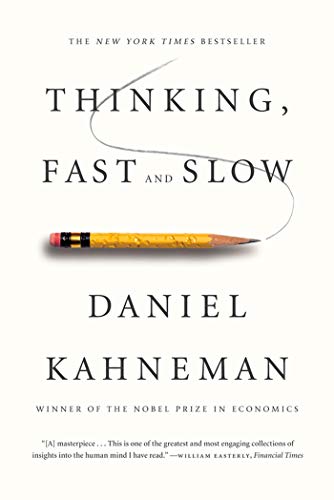
Based on your book
Thinking, Fast and Slow
by Daniel Kahneman
Thinking, Fast and Slow invites you on a profound journey into the architecture of your own mind. Daniel Kahneman, a Nobel laureate, unpacks the two distinct systems that govern our thoughts: the quick, intuitive 'System 1' and the slower, deliberate 'System 2'. This isn't just theory; it’s a detailed exploration of how these systems interact, often leading to surprising cognitive biases that shape our judgments and choices in everything from personal finance to public policy. The reading experience is a sustained, intellectual revelation — dense yet remarkably clear, challenging you to re-evaluate how you think you think. If you’re fascinated by human psychology, eager to understand the hidden forces behind your decisions, and appreciate a rigorous, analytical approach to self-improvement, this book will fundamentally shift your perspective. It’s for anyone who loves to dissect complex ideas and emerge with a sharper understanding of themselves and the world.
10 Books similar to 'Thinking, Fast and Slow'
If Daniel Kahneman's exploration of our minds left you hungry for more, these recommendations continue the journey. We've curated books that further dissect human decision-making and expose the systematic ways our brains can lead us astray, often for reasons we don't realize. You'll find more deep dives into cognitive biases and the analytical frameworks needed to understand them, offering new perspectives on self-improvement and the subtle forces shaping our choices. Each pick offers a fresh lens on human rationality and irrationality, much like Kahneman's groundbreaking work.
As an Amazon Associate, we earn from qualifying purchases.

by Richard H. Thaler and Cass R. Sunstein
This book takes the insights from behavioral economics, pioneered by Kahneman, and applies them to real-world policy and personal choices. Readers will appreciate its focus on understanding human decision-making and how subtle 'nudges' can lead to better outcomes, mirroring Kahneman's exploration of cognitive biases.

by Dan Ariely
Ariely's work is a direct companion to Kahneman's, delving into the systematic and often surprising ways humans make irrational decisions. It shares a similar accessible yet rigorous style, using engaging experiments and anecdotes to illustrate complex psychological principles.

While broader in scope, Harari's book offers a grand intellectual narrative on how human cognitive abilities and collective fictions have shaped our history and present. Fans of Kahneman will appreciate its analytical rigor, challenging assumptions, and deep dive into the human condition.
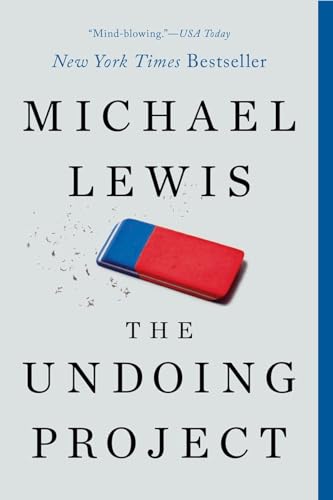
This book tells the compelling story of Daniel Kahneman and Amos Tversky, the two psychologists whose groundbreaking work forms the basis of 'Thinking, Fast and Slow.' Readers will gain a fascinating 'behind the scenes' look at the intellectual partnership that revolutionized our understanding of human judgment.

Not sure what they've already read?
Let them pick their next favorite with an Amazon Gift Card.
As an Amazon Associate, we earn from qualifying purchases.
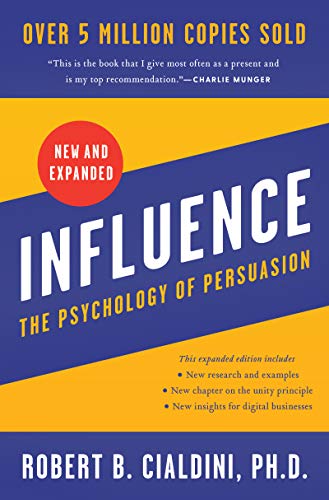
Cialdini explores the fundamental psychological principles that drive compliance and persuasion, tapping directly into the automatic, System 1 thinking Kahneman describes. It's a highly practical and insightful read for anyone interested in understanding human behavior and decision-making.
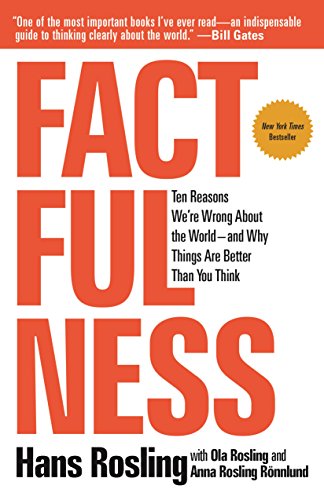
by Hans Rosling
Rosling's work directly confronts many cognitive biases, demonstrating how our worldview is often shaped by outdated information and dramatic instincts rather than facts. It encourages a data-driven, analytical approach to understanding global trends, much like Kahneman's call for deliberate thinking.

by Daniel Kahneman, Olivier Sibony, and Cass R. Sunstein
Co-authored by Kahneman himself, this book is a natural progression for his fans, exploring another critical flaw in human judgment: noise. It applies the same rigorous, analytical framework to differentiate between bias and unwanted variability in decision-making.

Taleb challenges our understanding of probability, prediction, and human rationality by focusing on the impact of rare, unpredictable 'Black Swan' events. Like Kahneman, he exposes the limitations of human intuition and our tendency to rationalize the past.

Diamond's Pulitzer-winning work uses an analytical, evidence-based approach to explain vast historical patterns, much like Kahneman dissects cognitive processes. It challenges intuitive explanations for societal development, appealing to readers who enjoy deep, intellectual explorations of complex human phenomena.

by Carol Tavris and Elliot Aronson
This book delves into cognitive dissonance and self-justification, explaining why people cling to beliefs and decisions even when proven wrong. It offers a compelling, often witty, exploration of the psychological mechanisms that prevent us from admitting our errors, resonating with Kahneman's themes of human irrationality.

Prefer to listen?
Try Audible and hear the story instead of reading it.
As an Amazon Associate, we earn from qualifying purchases.
As an Amazon Associate, we earn from qualifying purchases.