

Based on your book
Thinking in Bets
by Duke, Annie
Annie Duke approaches life not as a series of guaranteed outcomes, but as a long-running poker game where luck and skill constantly collide. The core of her argument is that we often judge our decisions based solely on whether they worked out, rather than the quality of our thought process at the time. By learning to separate the two, you can stop kicking yourself for bad luck and start identifying where your actual biases are clouding your judgment. Reading this feels like sitting across from a sharp, experienced mentor who is gently dismantling your overconfidence. It is analytical, steady, and intentionally low on fluff. This is for the reader who wants to move past gut instinct and start treating their choices with the rigor of a professional strategist, whether they are navigating a career change or just trying to be more objective in their daily life.
10 Books similar to 'Thinking in Bets'
If the analytical rigor of Annie Duke’s philosophy resonated with you, these titles extend that intellectual exploration into the mechanics of human judgment. We selected these books because they share a common DNA: they treat decision-making as a skill that can be studied and improved rather than a static personality trait. Whether you are interested in the behavioral economics behind our irrational tendencies or the mathematical reality of probability, these picks provide the necessary tools to refine your mental models. They offer a cohesive toolkit for anyone looking to replace guesswork with informed, systematic reasoning.
As an Amazon Associate, we earn from qualifying purchases.
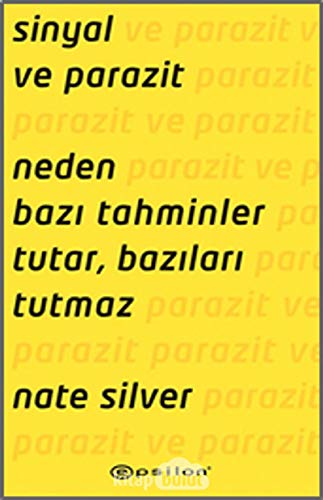
by Nate Silver
Like Annie Duke, Nate Silver explores the intersection of probability, data, and human error in decision-making. Readers who enjoyed the analytical approach to uncertainty in 'Thinking in Bets' will appreciate this deep dive into how we can better predict the future by understanding the difference between signal and noise.

by Philip E. Tetlock and Dan Gardner
This book serves as a perfect companion to Duke's work, focusing on the specific habits and mindsets that allow ordinary people to become elite forecasters. It reinforces the idea that decision-making is a skill that can be honed through practice and intellectual humility.

by Richard H. Thaler and Cass R. Sunstein
Thaler and Sunstein explore how our cognitive biases lead us to make poor choices, paralleling Duke's focus on how we can 'nudge' ourselves toward better outcomes. It provides a practical framework for structuring decisions to avoid the traps of human psychology.

Taleb's work is essential reading for anyone interested in the role of luck versus skill, a central theme in 'Thinking in Bets.' It challenges readers to confront their own biases regarding success and failure, much like Duke's argument about separating outcomes from decision quality.

Prefer to listen?
Try Audible and hear the story instead of reading it.
As an Amazon Associate, we earn from qualifying purchases.

by Annie Duke
Written by the same author, this book acts as a practical workbook for the concepts introduced in 'Thinking in Bets.' It is the ideal follow-up for readers who want actionable exercises to implement Duke's decision-making frameworks in their daily lives.
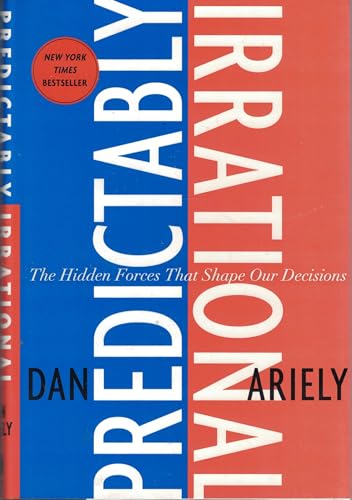
by Dan Ariely
Ariely delves into the hidden forces that shape our decisions, providing a behavioral economics perspective that complements Duke's poker-based insights. It helps readers recognize the systematic patterns of irrationality that affect everyone, regardless of their intelligence.

by Daniel Kahneman, Olivier Sibony, and Cass R. Sunstein
This book tackles the variability in human judgment, arguing that 'noise'—unwanted inconsistency—is just as damaging as bias. Fans of Duke's methodical approach to decision-making will find this deep exploration of judgment errors both challenging and highly rewarding.

Lewis tells the fascinating story of the friendship between Daniel Kahneman and Amos Tversky, the pioneers of behavioral economics. It provides the historical and intellectual context for the theories that underpin Annie Duke's decision-making strategies.

by Brian Christian and Tom Griffiths
This book applies computer science concepts to human decision-making, offering a unique lens on how to solve problems like when to stop searching or how to manage time. It shares the same 'systematic thinking' DNA as 'Thinking in Bets,' making it a great choice for analytical readers.

As the foundational text for much of modern decision-making literature, this book is essential for anyone who enjoyed the psychological underpinnings of 'Thinking in Bets.' Kahneman explains the two systems that drive our thoughts, providing the 'why' behind the 'how' of Duke's strategies.

Love to read on the go?
Explore Kindle e-readers and take your books with you.
As an Amazon Associate, we earn from qualifying purchases.
As an Amazon Associate, we earn from qualifying purchases.