
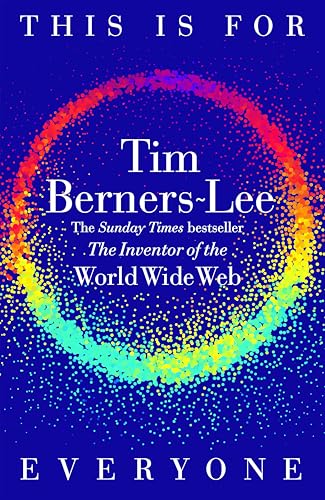
Based on your book
This Is for Everyone
by Tim Berners-Lee
Tim Berners-Lee, the mind behind the World Wide Web, offers a deeply personal and insightful look at his most famous invention. This isn't just a historical deep dive into how the web came to be; it's a thoughtful, sometimes urgent, exploration of its original promise versus its current realities. Berners-Lee shares the "behind the scenes" story of its creation with warmth and candor, then shifts to a compelling social commentary on the power dynamics and moral dilemmas that have emerged. You'll finish feeling both informed by the past and inspired to consider the web's future. It’s a book for anyone who uses the internet and wants to understand its foundations, its current challenges, and the hopeful vision for how we can reclaim it for human flourishing.
10 Books similar to 'This Is for Everyone'
If you appreciated the blend of historical narrative, social commentary, and hopeful vision in This Is for Everyone, then our curated list is for you. We've gathered books that continue Berners-Lee's exploration of technology's impact, from the "behind the scenes" stories of other digital pioneers to the profound power dynamics and moral dilemmas shaping our online world. You'll find deep dives into the history of information, critical looks at the internet's effects, and forward-thinking discussions on AI, all echoing Berners-Lee's call for a more open and ethical digital future.
As an Amazon Associate, we earn from qualifying purchases.

This book offers a comprehensive historical narrative of the people and ideas behind the digital revolution, from Ada Lovelace to the internet age. Fans of "This Is for Everyone" will appreciate the detailed "behind the scenes" look at the collaborative and often contentious process of technological innovation, mirroring the creation of the World Wide Web.

Lessig's seminal work delves into how code itself shapes behavior and governance in cyberspace, arguing that software architecture is a form of law. Readers who appreciated Berners-Lee's concerns about the principles and future of the open web will find this a crucial, thought-provoking exploration of power dynamics and political implications in the digital realm.

by Tim Wu
Wu's book chronicles the cyclical history of information industries, from telephone to film to the internet, showing how open systems tend to consolidate into closed monopolies. This resonates strongly with Berners-Lee's advocacy for an open web and provides a critical historical context for understanding the ongoing battles for digital freedom and decentralization.

by James Gleick
Gleick provides a sweeping intellectual history of information itself, from its earliest forms to the digital age, exploring the profound impact of information theory on science, technology, and culture. Readers interested in the foundational concepts underpinning the World Wide Web and its philosophical implications will find this a deeply enriching and expansive read.

Love to read on the go?
Explore Kindle e-readers and take your books with you.
As an Amazon Associate, we earn from qualifying purchases.

Carr critically examines the cognitive and cultural impact of the internet, arguing that its pervasive nature is fundamentally altering our brains and thought processes. While Berners-Lee focuses on the creation and potential of the web, Carr offers a crucial counterpoint on its less celebrated effects, appealing to readers who appreciate a nuanced, reflective view of technology's societal role.

Snowden's memoir offers a firsthand account of his journey from patriotic intelligence operative to whistleblower, exposing the vast surveillance apparatus of the U.S. government. This book provides a deeply personal and urgent perspective on the very issues of privacy, freedom, and the ethical use of technology that are central to Berners-Lee's vision for an open and secure internet.

by Max Tegmark
Tegmark explores the profound future implications of artificial intelligence, from its potential to solve global challenges to existential risks, prompting a discussion about humanity's long-term future. For readers who enjoyed the forward-looking and philosophical aspects of "This Is for Everyone" regarding technology's trajectory, this book offers a compelling and intellectual dive into the next frontier.

Harari presents a sweeping history of humanity, examining how cognitive, agricultural, and scientific revolutions have shaped our species, with significant attention to the role of information and technology. While broader in scope than "This Is for Everyone," its intellectual ambition and exploration of how shared narratives and technological advancements drive societal change will appeal to readers interested in the macro-level impact of innovation.

by George Dyson
Dyson's book delves into the fascinating intellectual ferment at Princeton's Institute for Advanced Study in the mid-20th century, where John von Neumann and his colleagues laid the theoretical and practical foundations for the digital computer. Fans of "This Is for Everyone" will appreciate this deep, historical dive into the pre-internet era, revealing the brilliant minds and fundamental ideas that paved the way for the World Wide Web.

by Erik Brynjolfsson and Andrew McAfee
This book explores the economic and societal transformations driven by digital technologies, particularly artificial intelligence and automation, and their implications for work, wealth, and human progress. Readers drawn to Berners-Lee's analysis of the internet's impact will find a compelling, data-driven examination of how the next wave of technological innovation is reshaping our world.

Not sure what they've already read?
Let them pick their next favorite with an Amazon Gift Card.
As an Amazon Associate, we earn from qualifying purchases.
As an Amazon Associate, we earn from qualifying purchases.