

Based on your book
Thunder at Twilight
by Morton, Frederic
Thunder at Twilight captures the final, dizzying months of the Austro-Hungarian Empire with the urgency of a ticking clock. Frederic Morton focuses on Vienna in 1913 and 1914, a city vibrating with both artistic genius and terminal political rot. You are not just reading about the events that sparked the First World War; you are walking through the cafes and corridors of power where the old world was actively dismantling itself. The prose is atmospheric and sharp, managing to make grand historical shifts feel intensely personal and claustrophobic. It is a portrait of a society dancing on the edge of a cliff, oblivious to the fall. This is the perfect read for history buffs who prefer their nonfiction to feel like a narrative thriller, and for anyone who enjoys dissecting the subtle, slow-motion collapse of once-mighty institutions.
10 Books similar to 'Thunder at Twilight'
Since you enjoyed the specific blend of cultural anxiety and political brinkmanship in this book, these titles were curated to deepen your understanding of that lost era. If the slow decay of the Habsburg dynasty held your attention, you will appreciate how these selections trace the same path from different angles, whether through the intimate memories of Stefan Zweig or the structural analysis of Pieter Judson. We have selected these works to help you map the intersection of personal hubris and geopolitical collapse, connecting the intellectual fervor of the time to the inevitable catastrophe that followed.
As an Amazon Associate, we earn from qualifying purchases.

Like Morton's work, this book offers a masterful, panoramic view of the political landscape leading up to the Great War. It captures the same sense of impending doom and the intricate, often tragic, decision-making processes of the era's key players.

Written by the same author, this book serves as a perfect companion piece to 'Thunder at Twilight.' It explores the same city's cultural and psychological anxieties, focusing on the Mayerling incident and the decay of the Habsburg dynasty.

by Stefan Zweig
This memoir provides an intimate, firsthand account of the vanishing world of pre-WWI Vienna that Morton describes. Zweig’s lyrical and nostalgic prose captures the exact cultural atmosphere and intellectual vibrancy that was about to be destroyed.

For readers fascinated by the political maneuvering and the 'what-ifs' of history found in Morton's work, this book provides a brilliant look at the aftermath of the war. It shares the same narrative drive and ability to bring historical figures to life in a high-stakes environment.

Love to read on the go?
Explore Kindle e-readers and take your books with you.
As an Amazon Associate, we earn from qualifying purchases.

This book offers a comprehensive, modern look at the empire that Morton depicts in its final throes. It provides the necessary broader context for the specific, localized drama of 1913-1914 Vienna, helping readers understand the structural collapse.
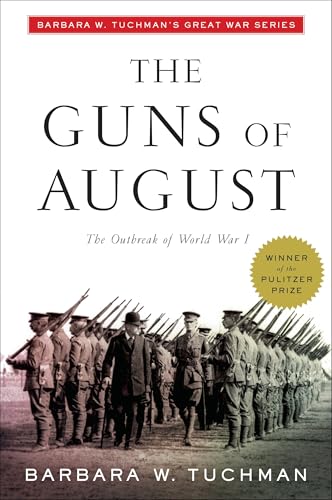
Tuchman’s classic history of the outbreak of WWI shares Morton’s talent for narrative nonfiction that reads like a thriller. It captures the hubris, the political errors, and the tragic momentum that defined the end of the era Morton chronicles.

To understand the 'vibe' of the society Morton describes, one must read the literature of the time. Schnitzler’s works perfectly encapsulate the psychological complexity, sexual repression, and underlying cynicism of the Viennese elite in the twilight of the empire.

by Joseph Roth
This classic novel serves as the fictional mirror to Morton's historical account, tracing the decline of the Austro-Hungarian Empire through the lens of a single family. It captures the exact melancholy and sense of inevitable decay that permeates 'Thunder at Twilight.'

This seminal work of cultural history explains the intellectual and artistic explosion that occurred in Vienna just before the collapse. It provides the 'why' behind the 'what' in Morton's book, connecting Freud, Klimt, and the political actors of the time.

This book shares the exact premise of Morton's work, focusing on a single, pivotal year in European history. It is written with a similar, almost cinematic flair, jumping between the lives of famous figures who were all unknowingly standing on the precipice of catastrophe.

Not sure what they've already read?
Let them pick their next favorite with an Amazon Gift Card.
As an Amazon Associate, we earn from qualifying purchases.
As an Amazon Associate, we earn from qualifying purchases.