

Based on your book
Tolkien On Fairy-Stories
by Flieger, Verlyn
Verlyn Flieger has done a service to literary history by meticulously reconstructing Tolkien's seminal essay on the nature of fantasy. This is not a light read; it is an intellectual deep dive into why we tell stories and what makes a fairy tale function as a serious art form rather than a whimsical distraction. You will spend time grappling with concepts like sub-creation, recovery, and the distinct difference between a childs fantasy and a mature myth. The pacing is deliberate and academic, demanding your full attention as it dissects the mechanics of imagination. It feels like sitting in on a private lecture by a brilliant, exacting professor. Pick this up if you are less interested in the plot of Middle-earth and more interested in the philosophical architecture that allowed Tolkien to build it in the first place.
10 Books similar to 'Tolkien On Fairy-Stories'
Since you enjoyed the analytical rigor of this volume, we have curated a selection that explores the same intellectual landscape. These recommendations focus on the philosophy of sub-creation, the historical context of the Inklings, and the broader study of mythic structures. Whether you want to see these theories applied in fiction or contrasted through other critical lenses, these titles bridge the gap between Tolkien's abstract arguments and the actual practice of myth-making. They are perfect for readers who want to move beyond the surface and understand the existential weight behind our favorite stories.
As an Amazon Associate, we earn from qualifying purchases.

This collection serves as the essential companion to Tolkien's thoughts on fantasy, containing his famous lecture on Beowulf which fundamentally shaped his approach to myth-making. Readers who appreciated the academic rigor and deep insight of 'On Fairy-Stories' will find this equally indispensable for understanding the roots of Middle-earth.

This volume contains the original essay 'On Fairy-Stories' alongside the allegorical story 'Leaf by Niggle,' providing both the theory and the practice of Tolkien's sub-creation philosophy. It is the most direct reading experience for those who want to see how Tolkien's critical theories manifested in his own creative work.
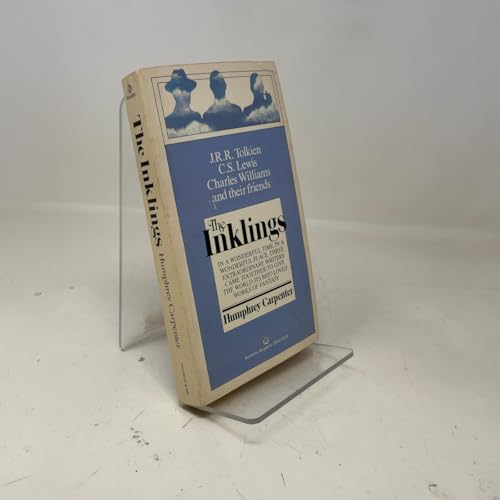
This biography provides the necessary context for the literary circle where Tolkien's ideas about fairy stories were debated and refined. It offers a fascinating look at the intellectual environment that nurtured the development of modern fantasy literature.
Written by the same scholar who edited 'Tolkien on Fairy-Stories,' this collection of essays delves deeper into the specific themes of time, myth, and the nature of evil in Tolkien's legendarium. It is a perfect follow-up for readers who enjoyed Flieger's scholarly precision and insightful commentary.

Not sure what they've already read?
Let them pick their next favorite with an Amazon Gift Card.
As an Amazon Associate, we earn from qualifying purchases.

Much like Tolkien's essay, this seminal work explores the universal structures of myth and the psychological necessity of the hero's journey. It provides a broader mythological framework that complements Tolkien's specific focus on the fairy-story genre.

This collection brings together Tolkien's shorter works that perfectly embody the principles he outlined in his essay, such as 'Smith of Wootton Major' and 'Farmer Giles of Ham.' It allows the reader to experience the 'Recovery,' 'Escape,' and 'Consolation' that Tolkien argued were the primary functions of fairy stories.

For readers interested in the critical theory behind fantasy, this book offers a rigorous examination of how fantasy literature challenges reality and societal norms. It provides a fascinating academic contrast to Tolkien's more romanticized view of the genre.

While it is a novel rather than an essay, reading the primary text after analyzing Tolkien's theory of sub-creation is a transformative experience. It allows the reader to see the 'primary world' and the 'secondary world' interact in exactly the way Tolkien theorized in his essay.

by C.S. Lewis
As Tolkien's close friend and fellow Inkling, C.S. Lewis shared many of the same views on the importance of myth and fairy tales, though with his own distinct voice. This collection offers a brilliant companion perspective on the nature of storytelling and the imagination.

Tolkien was deeply influenced by MacDonald, who he considered a master of the fairy-story genre. This classic work exemplifies the 'enchantment' and 'sub-creation' that Tolkien championed, making it an essential read for understanding the roots of his literary philosophy.

Prefer to listen?
Try Audible and hear the story instead of reading it.
As an Amazon Associate, we earn from qualifying purchases.
As an Amazon Associate, we earn from qualifying purchases.