
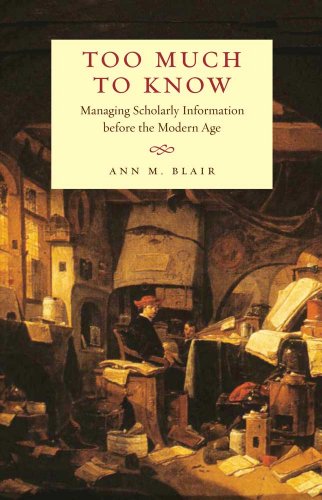
Based on your book
Too Much to Know
by Blair, Ann M.
Ann M. Blair invites us to look at the early modern era not as a time of simple discovery, but as a period defined by an acute sense of information overload. Long before the internet, scholars were drowning in a sea of printed material and struggling to find effective ways to organize, filter, and synthesize what they read. Blair examines how these thinkers developed note-taking systems and reference tools to manage the sheer volume of data at their fingertips. The reading experience is cerebral and methodical, moving at a pace that encourages reflection on our own current habits of consumption. If you have ever felt overwhelmed by the relentless flow of digital content or are curious about the historical origins of intellectual anxiety, this book offers a grounding, deeply researched perspective on the persistent human struggle to know enough without knowing too much.
10 Books similar to 'Too Much to Know'
Since you found Blair's exploration of information management compelling, these titles extend that conversation into the broader history of media and human cognition. Whether you are interested in the physical architecture of libraries or the psychological impact of the printing press, these selections mirror Blair's analytical rigor. We have curated these works to highlight the evolution of how we store, retrieve, and interpret knowledge. They provide the perfect intellectual context for those who want to understand the long-standing relationship between the tools we use and the way our minds process the world.
As an Amazon Associate, we earn from qualifying purchases.

by Andrew Pettegree and Arthur der Weduwen
Like Blair's work, this book explores the history of how humans have organized and preserved knowledge, focusing on the evolution of libraries as institutions. It offers a similarly rigorous yet accessible look at how the physical storage of information has shaped intellectual culture throughout history.

This classic text is essential for anyone interested in the history of information, as it examines how the shift from manuscript to print culture fundamentally altered the European intellectual landscape. It shares Blair's scholarly focus on the mechanics of information dissemination and its impact on human thought.

Gitelman investigates the history of the 'document' as a medium, exploring how we have historically categorized and understood information on paper. Readers who appreciated Blair's analysis of early modern note-taking and information management will find this exploration of media history equally fascinating.

Manguel provides a sweeping, deeply personal, and erudite history of the act of reading itself, covering everything from the invention of the alphabet to the digital age. It matches Blair's intellectual curiosity and provides a broader context for the scholarly habits she details.

Love to read on the go?
Explore Kindle e-readers and take your books with you.
As an Amazon Associate, we earn from qualifying purchases.

This narrative history details the rediscovery of an ancient manuscript and how it sparked the Renaissance, making it a perfect companion for readers interested in the history of books and ideas. It shares Blair's passion for the transformative power of texts and the historical preservation of knowledge.

by James Gleick
Gleick tackles the massive subject of information itself, tracing its history from African talking drums to the internet age. It echoes Blair's examination of 'information overload' but expands the timeline to show how humanity has always struggled to manage the sheer volume of data we produce.

Petroski offers a delightful history of the bookshelf, exploring how the physical storage of books has influenced their design and our interaction with them. It complements Blair's work by focusing on the material culture of scholarship and the practical challenges of organizing a personal library.

This foundational text explores how the printing press changed human consciousness and social organization, a theme central to Blair's research. Readers who enjoyed Blair's analysis of early modern scholarly practices will appreciate McLuhan's broader, more philosophical approach to media and communication.
by Paul Hazard
Hazard’s classic study of the 'crisis of the European mind' provides the perfect intellectual context for the period Blair discusses in her work. It delves into the changing methodologies of scholars and thinkers, offering a rich, historical backdrop to the information management techniques Blair highlights.

Chartier is a leading expert in the history of the book, and this collection of essays examines how the material form of texts influences their meaning and reception. It is a highly relevant scholarly companion to Blair's work, focusing on the intersection of reading, writing, and social history.

Not sure what they've already read?
Let them pick their next favorite with an Amazon Gift Card.
As an Amazon Associate, we earn from qualifying purchases.
As an Amazon Associate, we earn from qualifying purchases.