
Based on your book
Understanding Media
by Marshall McLuhan
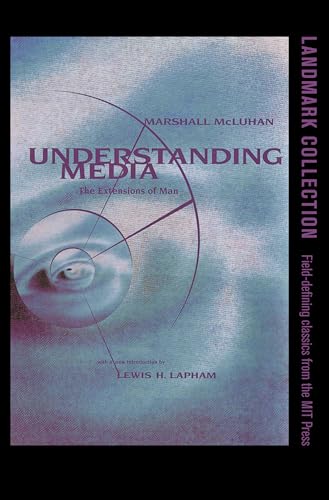
Marshall McLuhan's Understanding Media isn't a book you simply read; it's one you engage with, wrestle with, and ultimately, one that changes how you see the world around you. McLuhan's central argument — that 'the medium is the message' — dives deep into how the form of communication, be it print, television, or the internet, subtly but profoundly shapes our thoughts, perceptions, and societal structures, often more so than the content it carries. It's a complex, philosophical exploration, dense with insights that demand your full attention. The reading experience is like a continuous thought experiment, challenging you to look beyond the obvious. This book is for anyone who loves deconstructing cultural phenomena, enjoys rigorous analytical thinking, and wants to understand the invisible forces that mold modern society. It’s a foundational text for anyone interested in social commentary and the power dynamics of information.
10 Books similar to 'Understanding Media'
For those who found Understanding Media a profound and perspective-shifting experience, our recommended list delves further into the intricate ways media and technology shape human thought and society. These books continue McLuhan's critical examination of cultural analysis and power dynamics, exploring how different forms of communication influence our perception of reality and dictate societal values. You'll find further philosophical critiques of technological determinism and insightful social commentary on the pervasive influence of media on public discourse and individual consciousness.
As an Amazon Associate, we earn from qualifying purchases.

by Marshall McLuhan and Quentin Fiore
This book is a direct companion and visual exploration of McLuhan's ideas, presenting them in a highly accessible and experimental format. It visually demonstrates how the medium itself shapes the message, making it an essential read for anyone intrigued by "Understanding Media."

by Neil Postman
Postman directly extends McLuhan's theories, arguing that television's form trivializes public discourse, shifting focus from serious content to entertainment. Readers will appreciate its critical analysis of media's impact on culture and politics, echoing McLuhan's concerns about societal transformation.

by Neil Postman
Postman delves into how technology reshapes our worldview, arguing that modern society has uncritically embraced technology to its detriment, sacrificing traditional values. This book offers a compelling critique of technological determinism, much like McLuhan's examination of media's pervasive influence.

by Noam Chomsky and Edward S. Herman
This seminal work examines how mass media, through various filters, shapes public opinion to serve the interests of powerful elites. Fans of McLuhan will appreciate its rigorous analytical approach to understanding media's profound influence on society, albeit from a political economy perspective.

Prefer to listen?
Try Audible and hear the story instead of reading it.
As an Amazon Associate, we earn from qualifying purchases.

This dystopian novel explores a future society controlled through conditioning, technology, and pleasure, rather than overt force. It resonates with McLuhan's ideas by showing how media and technology can profoundly shape human experience, perception, and social structures, offering a fictional yet chilling parallel.

While focusing on totalitarian control, Orwell's masterpiece vividly illustrates how language and information are manipulated to control thought and reality. Readers interested in McLuhan's examination of media's power will find its exploration of surveillance, propaganda, and the distortion of truth highly relevant and impactful.

This earlier work by McLuhan traces the impact of the printing press on Western thought and society, coining the term "global village." It offers a historical deep dive into how a specific medium fundamentally reshaped human perception and culture, providing a crucial precursor to "Understanding Media."

Baudrillard's complex philosophical text explores the concepts of hyperreality, signs, and symbols, arguing that modern society is increasingly dominated by simulations that obscure reality. This book extends McLuhan's insights into media's power, delving deeper into how media shapes our perception of what is real.

by Mark Fisher
Fisher examines how capitalism has become so pervasive that it's difficult to even imagine alternatives, shaping our consciousness in a way analogous to McLuhan's media theory. This book provides a contemporary critical lens on how dominant systems influence perception and culture, offering a compelling modern parallel to McLuhan's work.

by Guy Debord
Debord critiques modern society as one where life is mediated by images and appearances, turning authentic social life into a mere spectacle. This book offers a powerful philosophical and political critique of media's role in creating a false reality, resonating deeply with McLuhan's concerns about the pervasive influence of media forms.

Love to read on the go?
Explore Kindle e-readers and take your books with you.
As an Amazon Associate, we earn from qualifying purchases.
As an Amazon Associate, we earn from qualifying purchases.