

Based on your book
Utopia for Realists
by Rutger Bregman
Utopia for Realists isn't just an exercise in hopeful thinking; it's a meticulously researched argument for why some of our most 'radical' ideas for a better society are actually quite achievable. Rutger Bregman takes you on a journey through history, presenting compelling evidence for concepts like Universal Basic Income, a shorter workweek, and open borders, showing how they've been tried, or nearly tried, with surprising success. Reading this book feels like a conversation with an incredibly smart, optimistic friend who refuses to accept cynicism as the default. It's a challenging but ultimately invigorating read that makes you question what you thought was impossible, leaving you with a genuine sense that a more equitable, humane world is not only desirable but within our grasp. This is for anyone who feels frustrated by the current state of affairs and is hungry for concrete, hopeful visions for the future.
10 Books similar to 'Utopia for Realists'
If you found yourself captivated by Rutger Bregman's clear-eyed optimism and his call to reimagine our economic and social systems in Utopia for Realists, you'll find plenty to consider in our other recommendations. We've curated books that share Bregman's commitment to evidence-based arguments for a better world, whether they're exploring the psychological underpinnings of human cooperation in Humankind, challenging the very notion of 'bullshit jobs' with David Graeber, or proposing new economic frameworks like those in Stephanie Kelton's The Deficit Myth. These selections will continue to challenge your assumptions about what's possible and inspire you with practical, hopeful visions for societal change.
As an Amazon Associate, we earn from qualifying purchases.

As Bregman’s follow-up to Utopia for Realists, this book provides the psychological and evolutionary foundation for his radical ideas. It challenges the cynical view of human nature, arguing that humans are hardwired for cooperation rather than competition, which serves as the necessary bedrock for any utopian project.

Bregman frequently cites Graeber’s work regarding the proliferation of meaningless employment in the modern economy. This book expands on the idea that much of our labor is socially useless, providing a witty and provocative argument for why we should decouple income from work through policies like Universal Basic Income.
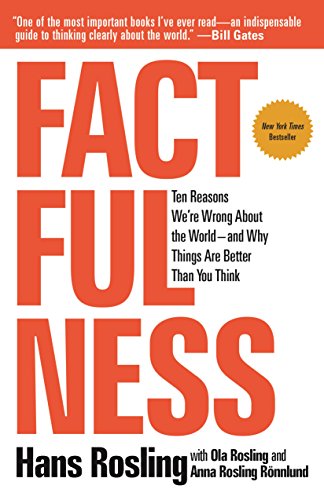
by Hans Rosling
Like Bregman, Rosling uses data and historical trends to combat prevailing pessimism about the state of the world. It shares the same accessible, evidence-based writing style and aims to give readers a more accurate, optimistic framework for understanding global progress.

by Jason Hickel
This book mirrors Bregman's interest in the systemic causes of poverty and the historical context of global economics. Hickel offers a radical rethink of how we view 'development' and 'aid,' proposing structural changes to the global economy that align with the bold reforms suggested in Utopia for Realists.

Not sure what they've already read?
Let them pick their next favorite with an Amazon Gift Card.
As an Amazon Associate, we earn from qualifying purchases.

If you enjoyed Bregman’s critique of the status quo and his call for genuine systemic change, this book is a perfect companion. Giridharadas examines how the global elite often protect the systems that cause social problems even while claiming to solve them through philanthropy.

by Guy Standing
As one of the world's leading experts on Universal Basic Income, Standing provides a more detailed policy-oriented deep dive into one of Bregman's core pillars. It shares the same sense of urgency and focuses on how a guaranteed income can provide security in an era of precarious labor.

Pinker shares Bregman's 'big picture' approach to history, using a vast array of metrics to show how human life has improved over centuries. While more centrist than Bregman, Pinker’s tone of data-driven optimism and his belief in the power of ideas to improve the world will resonate with fans.

by Jason Hickel
Bregman advocates for a shorter work week and a shift away from GDP-centric thinking; Hickel takes this further by exploring the 'degrowth' movement. The book is written with a similar clarity and sense of moral purpose, arguing for an economy that prioritizes human well-being over infinite expansion.
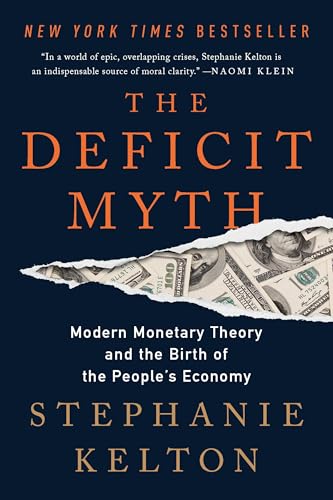
One of the most common rebuttals to Bregman’s ideas is 'how will we pay for it?' Kelton’s book provides a radical and accessible economic framework that challenges traditional views on government spending, making the case that society can indeed afford the bold investments Bregman proposes.

Varoufakis explains complex economic systems with the same conversational, jargon-free style that makes Bregman so readable. It provides a historical narrative of how our current economy was built and why it is essential to imagine a more democratic and equitable alternative.

Prefer to listen?
Try Audible and hear the story instead of reading it.
As an Amazon Associate, we earn from qualifying purchases.
As an Amazon Associate, we earn from qualifying purchases.