

Based on your book
War before civilization
by Lawrence H. Keeley
War before Civilization isn't here to soothe you with tales of a peaceful, idyllic past. Lawrence H. Keeley takes a direct, unvarnished look at archaeological and ethnographic evidence, arguing forcefully that warfare was a pervasive, brutal reality for many prehistoric societies. This isn't a speculative journey; it's a rigorous, often unsettling investigation that methodically dismantles the romantic notion of the "noble savage." The experience is intensely informative, demanding your full attention as Keeley presents his case with clarity and an unflinching eye. You'll find yourself constantly re-evaluating long-held assumptions about human nature and the very origins of our conflicts. This book is for readers who crave challenging historical analysis, who aren't afraid to confront uncomfortable truths, and who want to understand the deep, ancient roots of human aggression and power dynamics.
10 Books similar to 'War before civilization'
If Lawrence H. Keeley's unflinching analysis in War before Civilization resonated with you, you'll find plenty more to chew on within our recommendations. We've gathered books that similarly challenge conventional wisdom about human history, opting for rigorous, evidence-based deep dives into the origins of conflict, power, and societal structures. Whether it's the sweeping historical narratives that re-examine humanity's past, or the intense psychological explorations of violence, these titles share Keeley's commitment to understanding the often uncomfortable truths about our ancestors and ourselves. They'll keep you thinking long after you turn the final page.
As an Amazon Associate, we earn from qualifying purchases.

Like Keeley, Harari challenges conventional wisdom about human history, offering a sweeping, evidence-based narrative that includes the origins of violence, cooperation, and societal structures. It forces readers to reconsider humanity's past and present through a broad, analytical lens.

Pinker directly engages with the topic of human violence, using extensive data and historical analysis to argue for its long-term decline. While presenting a different conclusion than Keeley, it shares the rigorous, evidence-based approach to understanding human aggression and societal change.

Diamond, like Keeley, delves into deep history to explain the disparities in human societies, focusing on environmental and geographical factors. It provides a grand narrative of human development, including the role of conflict and conquest, appealing to readers interested in the broad forces shaping civilization.
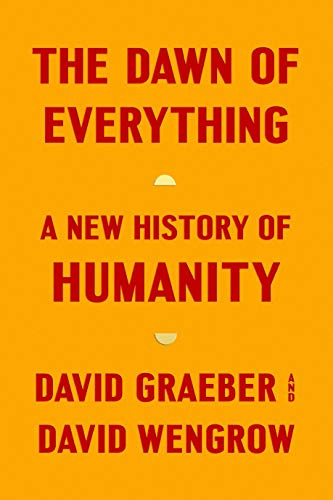
by David Graeber and David Wengrow
This book radically reinterprets early human history, directly challenging many assumptions about the origins of hierarchy, agriculture, and states, much like Keeley challenges assumptions about prehistoric peace. It offers a complex, nuanced, and often surprising view of our ancestors.

Not sure what they've already read?
Let them pick their next favorite with an Amazon Gift Card.
As an Amazon Associate, we earn from qualifying purchases.

While 'War before Civilization' focuses on the prevalence of ancient warfare, Grossman's work provides a psychological deep dive into the human capacity for violence and the mechanisms societies use to enable it. It offers a disturbing yet essential look at the individual experience of killing.

Fukuyama offers a monumental historical and analytical account of how political institutions, including states and legal systems, emerged from early human societies, often in response to or through conflict. This echoes Keeley's focus on the deep roots of societal structures and power.

Graeber's anthropological exploration challenges conventional narratives about the origins of markets and money, instead focusing on the complex social and moral economies of early societies, including the role of violence and power. It mirrors Keeley's approach of challenging simplistic views of the past.

by Daron Acemoglu and James A. Robinson
This book provides a compelling, evidence-based argument for how institutional choices, often born from conflict and power struggles, determine the success or failure of nations. Readers who appreciate Keeley's analytical approach to societal development will find this equally insightful.

Morris examines human behavior through an ethological lens, comparing us to other primates and exploring the evolutionary roots of aggression, social structures, and territoriality. This biological perspective complements Keeley's anthropological view of human conflict.

by Gwynne Dyer
Dyer provides a comprehensive and unflinching look at the history of warfare, from its ancient origins to modern conflicts, analyzing its causes, evolution, and impact on human societies. Its broad scope and realistic tone will resonate with readers of Keeley's work.

Prefer to listen?
Try Audible and hear the story instead of reading it.
As an Amazon Associate, we earn from qualifying purchases.
As an Amazon Associate, we earn from qualifying purchases.