

Based on your book
Wetware
by Dennis Bray
Dennis Bray's Wetware unpacks a truly fascinating idea: that the internal chemistry of living cells operates like a sophisticated computer. It's not a dry academic read; instead, Bray has a knack for making complex biological processes feel utterly graspable, using clever analogies that make you see the familiar world in a new light. You'll find yourself thinking differently about everything from an amoeba's movements to the very definition of intelligence. The book moves at a steady, engaging pace, offering a clear, surprising perspective that challenges conventional wisdom about life itself. If you're a curious reader who enjoys accessible science writing that genuinely makes you think, especially about the intersection of biology and information, this one is for you. It's for anyone who loves connecting big ideas across different fields.
10 Books similar to 'Wetware'
If Wetware sparked your curiosity about the fundamental nature of life and how information shapes it, you'll find kindred spirits in these recommendations. We've gathered books that likewise push the boundaries of scientific exploration, often using analogy to clarify profound concepts. Many of these titles, like Bray's work, challenge you to rethink conventional wisdom about consciousness, computation, and the intricate connections between biology, physics, and technology. They explore the same interdisciplinary themes, from the mechanics of the mind to the very fabric of information, offering further journeys into what it means to be alive and intelligent.
As an Amazon Associate, we earn from qualifying purchases.

This book explores the nature of consciousness and the relationship between the mind and physics, similar to the themes of biology and information in 'Wetware.'
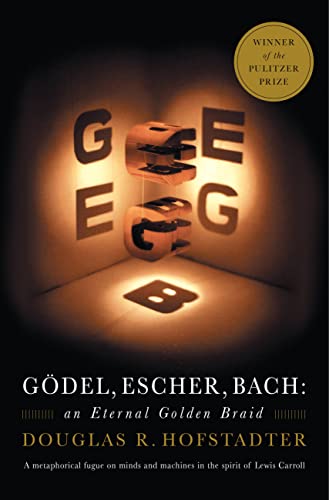
Hofstadter's exploration of the connections between mathematics, art, and music mirrors Bray's investigation into the intersection of biology and technology.

by Jim Al-Khalili and Johnjoe McFadden
This book delves into quantum mechanics' role in biological processes, akin to 'Wetware's' examination of biological systems and computation.

Dawkins' book on evolutionary biology and the concept of genes as information units aligns with the themes of information and biological systems in 'Wetware.'

Love to read on the go?
Explore Kindle e-readers and take your books with you.
As an Amazon Associate, we earn from qualifying purchases.
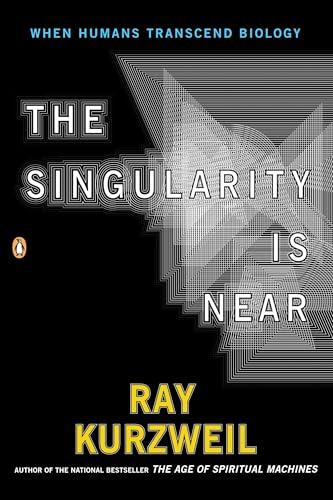
by Ray Kurzweil
Kurzweil's discussion of the future of technology and its integration with human biology complements the biotechnological insights presented in 'Wetware.'

by James Gleick
Gleick's exploration of information theory and its impact on the world parallels the informational themes in 'Wetware.'

Waldrop's examination of complexity science and systems theory resonates with Bray's exploration of complex biological systems.

'Biocode' explores the implications of genomic science and biotechnology, topics that are central to 'Wetware.'

Goodsell's vivid depiction of molecular biology provides a visual and conceptual complement to the themes of biological machinery in 'Wetware.'

by Hans Moravec
Moravec's exploration of robotics and artificial intelligence provides a technological perspective that aligns with the biological and computational elements in 'Wetware.'

Not sure what they've already read?
Let them pick their next favorite with an Amazon Gift Card.
As an Amazon Associate, we earn from qualifying purchases.
As an Amazon Associate, we earn from qualifying purchases.