

Based on your book
What If?
by Munroe, Randall
Randall Munroe takes the most absurd, physics-defying questions sent to his website and answers them with the cold, hard rigor of a scientist and the deadpan delivery of a stand-up comedian. You might find yourself learning the terminal velocity of a falling steak or the environmental consequences of a mole of moles, all while dodging stick-figure illustrations that somehow clarify the chaos. It is a book that treats the laws of thermodynamics with the same casual playfulness as a dinner party anecdote. The pacing is fragmented and snackable, making it perfect for those who want to feel smarter without the weight of a textbook. If you have ever looked at the world and wondered how quickly you could destroy it with basic math, this is the book for you.
10 Books similar to 'What If?'
Since you enjoyed the blend of intellectual rigor and irreverent humor in What If?, these selections were curated to keep that specific curiosity alive. We chose books that mirror Munroe’s ability to turn complex scientific inquiry into a conversational, human experience. Whether you are looking for more deep-dives into the absurd side of research, like Mary Roach’s work, or philosophical explorations of the universe, these titles share that same analytical spark. They treat science not as a dry discipline, but as a lens for viewing the weird, wonderful, and occasionally terrifying reality we inhabit.
As an Amazon Associate, we earn from qualifying purchases.

by Bill Bryson
Like Munroe, Bryson takes complex scientific concepts and makes them accessible, hilarious, and utterly fascinating for the layperson. It shares the same sense of wonder about how the world works, delivered with a witty and conversational narrative voice.

This book masterfully bridges the gap between hard science and human storytelling, much like Munroe's ability to ground absurd hypotheticals in real-world physics. It offers a deeply analytical look at scientific ethics while remaining incredibly engaging and accessible.

Tyson shares Munroe's gift for distilling massive, mind-bending scientific concepts into bite-sized, digestible chapters. It is the perfect follow-up for anyone who enjoyed the intellectual curiosity and playfulness of 'What If?'

by Mary Roach
Mary Roach is perhaps the closest peer to Randall Munroe in terms of tone; she investigates the weird, gross, and absurd side of scientific research. Fans will love her humorous, observational approach to answering the questions we didn't know we had.

Love to read on the go?
Explore Kindle e-readers and take your books with you.
As an Amazon Associate, we earn from qualifying purchases.

If you enjoyed 'What If?', this is the natural next step from the same author, applying the same rigorous scientific analysis to equally ridiculous, practical problems. It maintains the exact same voice, stick-figure charm, and analytical humor.

by Carl Sagan
Sagan provides the philosophical backbone to the curiosity found in Munroe's work, championing scientific literacy with warmth and clarity. It is an inspiring read for anyone who values the analytical mindset that 'What If?' encourages.
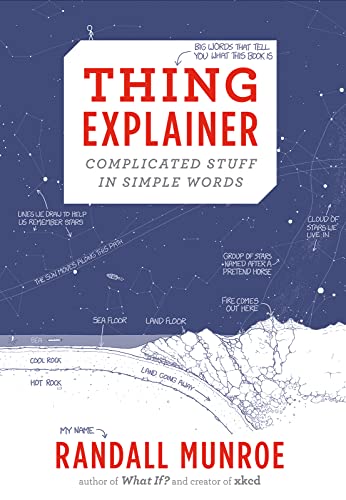
This book utilizes Munroe's unique 'Up-Goer Five' constraint—explaining complex machinery using only the thousand most common words. It is a visual and intellectual treat that mirrors the playful, educational spirit of his other works.

Rovelli manages to make the most complex theories of modern physics feel poetic and intimate, much like how Munroe makes physics feel fun and approachable. It is a short, punchy, and deeply contemplative read.

by Ben Goldacre
For readers who enjoyed the 'serious' side of Munroe's answers, Goldacre provides a sharp, witty, and analytical takedown of pseudoscience. It shares the same commitment to facts and the same dry, humorous delivery.

Dawkins brings a rigorous, analytical, and surprisingly passionate voice to scientific explanation, similar to the way Munroe treats his hypothetical scenarios. It is deeply informative and intellectually satisfying for curious minds.

Not sure what they've already read?
Let them pick their next favorite with an Amazon Gift Card.
As an Amazon Associate, we earn from qualifying purchases.
As an Amazon Associate, we earn from qualifying purchases.