
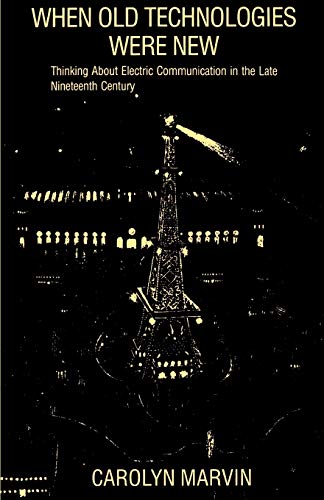
Based on your book
When Old Technologies Were New
by Marvin, Carolyn
When Old Technologies Were New turns the spotlight on the late nineteenth century to show that our current anxieties about the digital age are far from original. Carolyn Marvin examines how society struggled to define the telephone, the lightbulb, and the electric motor, peeling back the layers of panic, excitement, and power plays that accompanied these inventions. Rather than focusing on the hardware itself, she digs into the human reactions, professional turf wars, and social anxieties that shaped how these tools were adopted. The prose is analytical and dense, rewarding readers who enjoy picking apart the invisible social structures that dictate how we live. If you are the type of person who likes to question the status quo and wants to understand the historical DNA of our modern tech-obsessed culture, this book offers a sharp, observational lens on the past.
10 Books similar to 'When Old Technologies Were New'
Since you enjoyed Marvin's deep dive into how society grapples with shifting communication landscapes, these titles were selected to expand that inquiry. Books like The Victorian Internet and The Master Switch mirror her focus on the structural power dynamics and cultural ripple effects of media innovation. For readers who want to move beyond the surface of technical progress, Neil Postman and David Edgerton offer the same critical rigor regarding how we integrate tools into our daily lives. These selections emphasize the messy, human-centric history behind the systems we now take for granted.
As an Amazon Associate, we earn from qualifying purchases.

by Tom Standage
Like Marvin's work, this book explores the social history of technology, specifically drawing parallels between the 19th-century telegraph and the modern internet. It captures the same fascination with how society reacts to and is transformed by communication breakthroughs.

by Tim Wu
This book provides a rigorous analysis of how information technologies evolve from open systems to closed monopolies, echoing Marvin's interest in the power dynamics surrounding new media. It is essential reading for understanding the structural history of communication industries.

by Neil Postman
Postman offers a critical, philosophical examination of how technology dominates modern culture, a theme that deeply resonates with Marvin's exploration of societal adaptation. It challenges the reader to consider the hidden costs of technological progress.

by Jon Gertner
This narrative history offers a behind-the-scenes look at the invention of the technologies that define our modern era, providing a perfect complement to Marvin's focus on the early days of electric media. It bridges the gap between technical innovation and cultural impact.

Not sure what they've already read?
Let them pick their next favorite with an Amazon Gift Card.
As an Amazon Associate, we earn from qualifying purchases.

While broader in scope, Scott's exploration of how states attempt to standardize and control society through technology and planning shares Marvin's analytical rigor regarding social control. It is a profound look at the friction between technological systems and human life.

Edgerton challenges the obsession with 'new' inventions, much like Marvin challenges our assumptions about the novelty of the past. This book offers a refreshing, non-linear perspective on how technology is actually used in society.

by Katie Hafner
This book provides a detailed, human-centric history of the development of the internet, mirroring the way Marvin looks at the human element behind the telephone and telegraph. It captures the collaborative and often messy process of technological evolution.

As a foundational text in the field of Science and Technology Studies (STS), this book aligns perfectly with Marvin's methodology of analyzing technology as a social construct rather than an autonomous force. It is a dense, rewarding read for serious scholars of the subject.

Hughes provides the essential context for the era Marvin studies, detailing the massive infrastructure and social shifts required to electrify the world. It is a masterful study of how large-scale systems are built and maintained.

Marvin's work is indebted to the media theory pioneered by McLuhan, who famously explored how communication technologies shape human perception and social organization. Readers interested in the theoretical underpinnings of Marvin's arguments will find this essential.

Love to read on the go?
Explore Kindle e-readers and take your books with you.
As an Amazon Associate, we earn from qualifying purchases.
As an Amazon Associate, we earn from qualifying purchases.