

Based on your book
Why the West Rules - For Now
by Ian Morris
Ian Morris's "Why the West Rules - For Now" takes on one of history's biggest questions: how did the West come to dominate the globe, and is that era ending? He offers a sweeping, 50,000-year journey through human history, arguing that it's not about inherent cultural superiority or the actions of a few great individuals. Instead, Morris makes a compelling case for how geography and humanity's constant struggle with resource scarcity, disease, and climate have shaped the rise and fall of civilizations. Reading this feels like sitting down with a brilliant, well-traveled professor who's connecting dots across millennia. It’s an intellectual feast, thought-provoking and analytical, perfect for anyone who loves big-picture historical analysis and wants to understand the deep, underlying forces that have shaped our world.
10 Books similar to 'Why the West Rules - For Now'
If you appreciated the grand historical sweep and incisive analysis of "Why the West Rules - For Now," you'll find kindred spirits in these recommendations. We've curated this list for readers who love a good historical deep dive, especially those focused on power dynamics and cultural analysis across vast stretches of time. These books, much like Morris's work, challenge conventional narratives and explore the fundamental forces — be they geographical, economic, or social — that drive the rise and fall of civilizations. Each offers a unique, yet equally ambitious, look at humanity's long and complex journey, inviting you to connect the dots and ponder the big questions.
As an Amazon Associate, we earn from qualifying purchases.

Harari's sweeping narrative examines the entire history of humanity, from our earliest ancestors to the present, exploring the cognitive, agricultural, and scientific revolutions that shaped us. Like Morris, he offers a grand, analytical perspective on the forces driving human development and societal change across millennia.

Diamond directly addresses the question of why some societies developed faster than others, focusing on environmental and geographical factors, a core theme also explored by Ian Morris. This book provides a compelling, evidence-based argument for the long-term historical trajectories of civilizations.

Frankopan shifts the historical lens away from a Western-centric view, highlighting the centrality of the East and the interconnectedness of civilizations along the Silk Roads. Readers of Morris will appreciate its global scope, challenging traditional narratives and emphasizing the complex interplay of cultures and economies.

This book investigates the environmental and societal factors that have led to the downfall of various civilizations throughout history, offering cautionary tales and lessons for the present. Like Morris, Diamond uses a broad historical lens to analyze long-term patterns of societal success and failure.

Love to read on the go?
Explore Kindle e-readers and take your books with you.
As an Amazon Associate, we earn from qualifying purchases.

by Paul Kennedy
Kennedy analyzes the interplay of economic strength and military power in the rise and decline of major world powers over the past five centuries. Its focus on long-term trends in geopolitical and economic power dynamics makes it a natural fit for readers who appreciate Morris's analytical approach to historical power shifts.

Graeber offers a radical reinterpretation of the history of debt, money, and markets, challenging conventional economic narratives from ancient times to the present. Its vast historical scope and critical analysis of fundamental societal structures will appeal to those who enjoy Morris's deep dives into the underpinnings of civilization.
by J.R. McNeill and William H. McNeill
This book presents a concise yet comprehensive history of the world through the lens of interconnected 'webs' of human interaction, communication, and trade across millennia. It shares Morris's ambition to explain global historical patterns and the long-term evolution of human societies in an accessible, analytical manner.

by Will Durant and Ariel Durant
This concise masterpiece distills the major themes and patterns from their monumental 'Story of Civilization,' offering profound insights into human nature, society, and the forces that shape history. Readers who appreciate Morris's reflective and analytical approach to grand historical questions will find deep resonance here.

Pinker uses vast amounts of data and historical analysis to argue for the progress of humanity across various metrics, challenging pessimistic views of the present and future. Like Morris, he takes a long-term, evidence-based approach to understanding societal development and the factors that drive change.
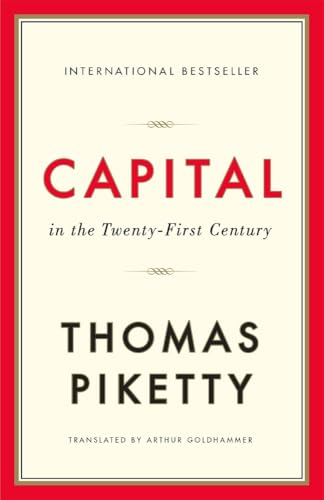
Piketty offers a monumental, data-driven analysis of wealth and income inequality over centuries, challenging conventional wisdom and providing a new framework for understanding economic history. Its rigorous, long-term perspective on economic power dynamics mirrors Morris's comprehensive approach to historical forces.

Not sure what they've already read?
Let them pick their next favorite with an Amazon Gift Card.
As an Amazon Associate, we earn from qualifying purchases.
As an Amazon Associate, we earn from qualifying purchases.